
You used to be the patient one. Or at least the one who could hold it together until the door was closed and the kids were in bed.
Now there’s a hot, sudden anger that arrives without warning. Your partner asks a question and you want to throw something. Your teenager leaves their dishes on the counter for the third time and you find yourself shaking. A driver cuts you off and you feel a fury that doesn’t match the moment at all and takes you by surprise.
And then, the shame comes. You promise yourself you’ll do better. You wonder what’s wrong with you and worry that this is who you are now.
I want to offer a different lens.
This is more common than you’ve been told
If you have started searching things like "perimenopause rage" or "why am I so angry," you are far from alone. Research suggests irritability is the primary mood complaint for up to 70% of women in perimenopause. About 4 in 10 women experience mood symptoms during the transition that are similar to what they may have felt premenstrually, except the timing is unpredictable and the intensity is often greater.
I know that when I first started with perimenopause there was a time when I got so angry with my husband for throwing out some bacon fat for a recipe I had, I stomped my foot like a 3 year old and couldn’t stop myself. Not cool!
I want you to know that this isn’t you failing. It is a real and well-documented experience, and it has reasons behind it that are worth understanding.
What’s actually happening in your body
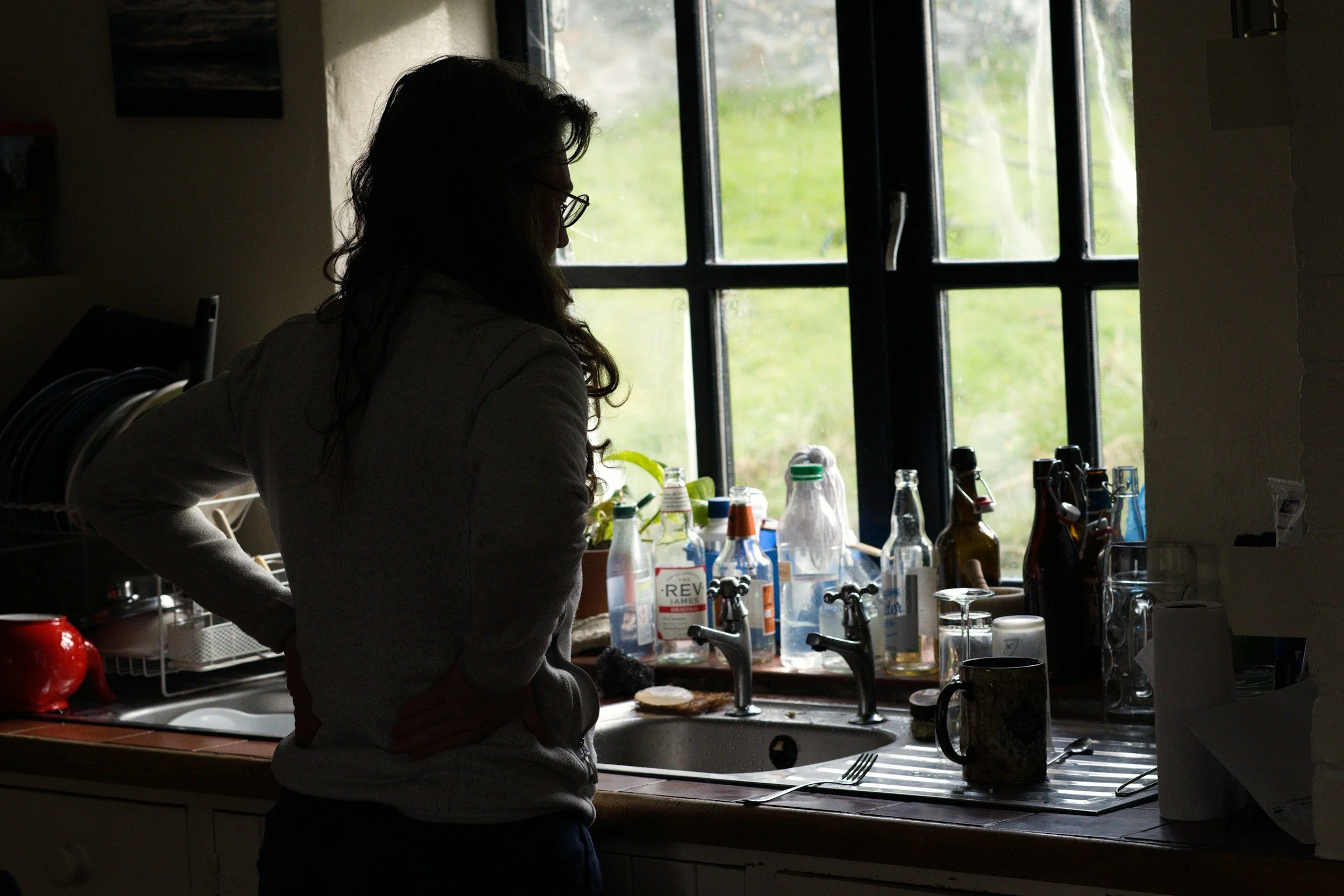
Estrogen, progesterone, and testosterone all have important roles in the brain, particularly in the regions that regulate emotion. The amygdala, the part of your brain that processes threat and fear, is rich in hormone receptors. So is the prefrontal cortex, the part that helps you pause, regulate, and respond thoughtfully.
When these hormones fluctuate (and in perimenopause they don’t just decline, they swing…sometimes wildly) the communication between these regions becomes less reliable. Your threat detector becomes more sensitive. Your regulator becomes less consistent. Stress hormones like cortisol can spike more easily and stay elevated longer.
What this means in practical terms is that your nervous system has less margin than it used to. The same things that used to register as mildly annoying now register as urgent. The same comments that used to roll off you now feel intolerable. You have not become a different person. Your internal threshold has shifted.
This is NOT in your head. It IS in your brain chemistry. And it deserves to be taken seriously.
What the rage is often telling you
Here’s where the trauma-informed lens matters, because while the hormonal piece is real, it’s also rarely the whole story.
Anger in midlife is often a messenger. It doesn’t always announce itself politely or say “hey…just so you know, this is part of how you’re going to experience menopause…get ready”. Sometimes it shows up loud, embarrassing, and disproportionate to the moment. But underneath the surface, it’s usually pointing at something true.
It might be pointing at years of emotional labour that have gone unacknowledged. The mental load of running the household, managing the calendars, anticipating everyone's needs, smoothing the rough edges. The work that has no salary attached and often no thanks either and you’ve been carrying silently until now.
It might be pointing at boundaries that were never held. Times when you said yes when you wanted to say no. Times when your needs were ranked last and you accepted it even if you muttered under your breath. Times when you were told, directly or indirectly, that your job was to keep the peace.
It might be pointing at old wounds that were never fully addressed. The way you learned to swallow anger as a child because it wasn’t safe to feel it let alone express it. The way you adapted to relationships where your anger was punished or dismissed. The way you became the steady one because someone had to be, and there was no one else.
When estrogen drops and the buffer thins, all of that has somewhere to go. And it goes where it has always wanted to go, which is out. To quote Shrek “better out than in I always say.”
Why this often happens at home
Most women I work with aren’t raging at strangers (although you might while in the car). They’re raging at the people closest to them. The partner, the children, the parents. The people who, on paper, they love most.
There is a reason for this. The people closest to us are also the people we have made the most accommodations for. They’re the ones we’ve softened ourselves around. They’re the ones whose patterns we’ve absorbed and worked around for years, often without naming it.
When the capacity to keep accommodating runs out, the people who benefited most from the accommodation are the ones who feel the change first. This isn’t because you don’t love them. It’s happening because the contract you’ve been holding silently is finally up for renegotiation.
That is hard. It is also, often, important.
The question underneath the anger
When a woman comes into my office talking about her rage, I often ask her a version of this question. What is your anger trying to tell you?
The answers are almost always more specific and more useful than people expect.
"I am exhausted and no one notices."
"I have been doing this alone for twenty years."
"I don’t want to keep being the one who manages everyone's feelings."
"I miss who I used to be."
"I am scared of what I want and telling people."
"I am not okay, and I haven’t been okay for a long time."
The rage is rarely the problem. The rage is the cover. Underneath it is something more honest, and that honest thing is usually what needs the attention.
What helps
Working with the body matters. When the nervous system is amped up, talking alone is not enough. Sleep, movement, breath, time outside, time away from screens, time alone in your own company. These aren’t luxuries. They’re how you give your nervous system room to recalibrate.
Working with the medical piece matters too. If your perimenopause symptoms are significantly affecting your quality of life, please don’t suffer through them in silence. Talk to a doctor or naturopath who is current on menopause care. Hormone therapy isn’t the right answer for everyone, but for many women it is genuinely life-changing, and the conversation deserves to be had on real evidence rather than outdated fear.
Working with what is underneath matters most of all. The rage is pointing at something. Therapy that takes both your hormones, your history and your present seriously can help you listen to what it is saying. Not so you can suppress the anger. So you can let it tell you what needs to change and start having a voice.
Sometimes what needs to change is internal. Old beliefs about your worth, your role, your right to take up space.
Sometimes what needs to change is external. The way work happens in your home, the way conflict is handled in your marriage, the way you are spending your time.
Often it is both.
You are allowed to want something different
I want to say this clearly because so many women I work with have never been given permission by themselves or others to truly hear and believe it.
You are allowed to want something different in this next part of your life than you wanted in the last.
You are allowed to be done carrying what isn’t yours to carry. You are allowed to feel anger that was never safe to feel before. You are allowed to ask for changes that feel uncomfortable to ask for. You are allowed to outgrow arrangements that no longer fit.
The rage isn’t the enemy. The rage is information that you want to be curious about. The work isn’t to silence it. The work is to listen carefully, take it seriously, and let it lead you toward the life that is actually yours to live.
If you would like support working through what your anger has been trying to tell you, I welcome you to reach out.
Want to keep reading?
If this article spoke to you, you may also be interested in:
- When Menopause Feels Like Trauma: Making Sense of What Nobody Warned You About
